



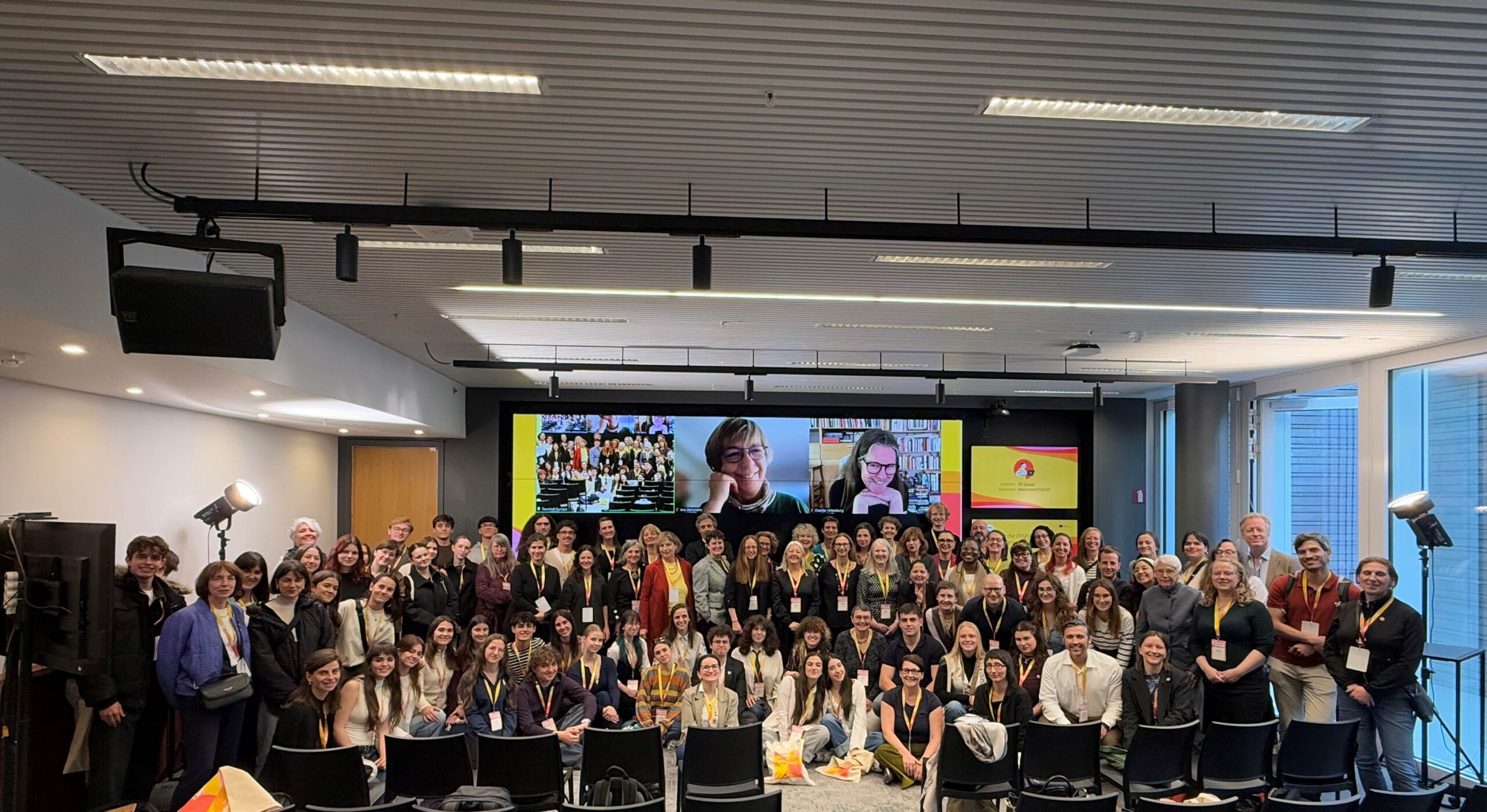
Notus is taking part in the INSPIRE 2nd Conference in Brussels: Inclusive gender equality in R&D from an intersectional perspective. Lessons from INSPIRE for the evidence base, practice and policy.
On April 16th and 17th, Brussels became the focal point for European gender policy in academia during the second international conference of the INSPIRE project. The event brought together nearly 150 on-site and online participants, including policymakers, European Commission representatives, social scientists, and consortium partners, to discuss how to sustain structural and effective change in research and innovation (R&I) institutions.
INSPIRE: A Centre of Excellence for Inclusive Transformation
Funded by the Horizon Europe program, INSPIRE stands as Europe’s leading Centre of Excellence for inclusive gender equality in R&I. Throughout its implementation, the project has developed a cutting-edge research and action framework based on creating Communities of Practice (CoPs). These networks have driven mutual learning and effectively narrowed geographical gaps in the implementation of inclusive Gender Equality Plans (GEPs), with a strategic focus on Central and Eastern Europe as well as Latin America.
Key Debates in Brussels: Evidence, Resilience, and Intersectionality
The Brussels conference successfully bridged the gap between scientific evidence, field experience, and policy design. Panel discussions were structured around three major contemporary challenges:
- Tailored Approaches over “One Size Fits All”. INSPIRE’s findings highlight that uniform recipes are ineffective. Gender equality policies must flexibly adapt to the specific political, cultural, and organizational contexts of each institution and country.
- Building Resilience Against Political Backlash. Amid an increasingly challenging political climate in Europe marked by opposition to gender policies, the conference prioritized strategies to safeguard progress. Key speakers emphasized the urgent need to institutionalize “infrastructures for change” and reinforce transnational support networks to counter resistance.
- Intersectionality as a Requirement for Excellence. Experts agreed that integrating cross-cutting dimensions such as socioeconomic background, ethnicity, or age into institutional GEPs is not an optional add-on, but a prerequisite for scientific excellence with real-world impact.
Notus Shaping Future EU Science Policy
Notus played a prominent role in defining the long-term legacy of the project. Our researcher, Lorena Pajares Sánchez, co-led the strategic closing session titled “Where do we go from here?” alongside INSPIRE project coordinator Rachel Palmén (Open University of Catalonia).
In this final panel, Notus actively contributed to shaping the policy recommendations that will be submitted to the European Commission. These proposals aim to embed INSPIRE’s tools and methodologies into upcoming European policy instruments, such as the future European Research Area (ERA) Act, ensuring that inclusive and intersectional gender equality remains a core structural pillar of the European scientific agenda.
(Header photo: INSPIRE web)


Comments are closed.