



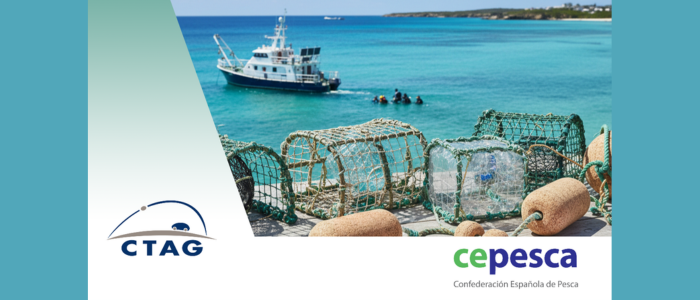
Notus takes part in the REDISMAR conference on women, eco-design and the circular economy in fishing gear
On 21 July, our colleague Lorena Pajares, a researcher at Notus, took part in the online conference ‘REDISMAR: Women, eco-design and the circular economy in fishing nets and gear’, organised by CEPESCA (Spanish Fisheries Confederation) as part of the REDISMAR project. The event is being held in collaboration with the Biodiversity Foundation of the Ministry for Ecological Transition and the Demographic Challenge, through the Pleamar Programme, and is co-funded by the European Union via the EMFF (European Maritime, Fisheries and Aquaculture Fund).
Lorena Pajares gave a presentation entitled “How to incorporate a gender perspective into innovation and eco-design projects”, in which she explained why design – and eco-design in particular – is not gender-neutral, and what it means to incorporate the diversity of people who use, repair or depend on fishing gear into innovation processes. Her presentation covered the four dimensions of eco-design (environmental, technical, economic and social/governance) to demonstrate how the gender perspective cuts across each of them – from who benefits from environmental improvements to who participates in design decisions or gains access to the new economic opportunities generated by the circular economy.
The event also featured a round-table discussion with women from the fisheries and technology sectors, including representatives from associations of shipowners, net-makers and shellfish gatherers, and from fishermen’s guilds, as well as an engineer from CTAG (Galician Automotive Technology Centre). The exchange of experiences during this session proved particularly inspiring and productive, and gave rise to new ideas to inform the indicators of the eco-design matrix presented by CTAG, a tool that will guide the development of the REDISMAR project in its next phases.
At Notus, we remain committed to integrating a gender perspective into innovation and ecological transition processes, convinced that this is the only way to move towards more sustainable, viable and fair solutions.
(Photo credits: REDISMAR project (CEPESCA, CTAG, Fundación Biodiversidad, Programa Pleamar))

Comments are closed.